Amsterdam offices: from open-plan to bespoke

For years, open-plan offices dominated as the standard solution for efficient space utilization. Today, however, a new reality is emerging in which customization, well-being, and productivity take center stage. This shift is not a temporary trend, but a structural transformation driven by scientific insights, changing work patterns, and an increasing focus on sustainability and health.

The Open-Plan Office Has Reached Its Limits

Since the 1990s, the open-plan office has become the dominant office concept in Amsterdam. Open layouts made it possible to create many workstations on a single floor, aligning with management ideas about transparency and short communication lines. A significant part of Amsterdam’s office real estate was developed during this period according to this open-office philosophy.

Research now shows that the assumed productivity gains of open offices do not apply to all types of work. Studies indicate that approximately 69% of employees in open offices experience noise disturbances as a barrier to productivity. On average, it takes more than twenty minutes to fully regain concentration after an interruption. These findings align with cognitive psychology research on multitasking, which shows that frequent interruptions lead to mistakes, fatigue, and lower task performance.

The COVID-19 pandemic acted as a catalyst for reconsideration. During lockdowns, many knowledge workers discovered that working from home often provided greater autonomy and concentration. Employees who became accustomed to quiet home working environments frequently experience returning to busy open offices as a step backward. This has increased the demand for offices that better accommodate different work styles and tasks.

The Amsterdam Market in Motion

The Amsterdam office market presents a nuanced picture. As of January 1, 2024, average office vacancy in the Amsterdam Metropolitan Area was approximately 12.4%, while vacancy within the municipality of Amsterdam stood around 7.8% according to CBRE’s definition. Using a broader definition, vacancy in Amsterdam rose to approximately 9.3% in 2024, placing the capital above the national average.

This rising vacancy is not evenly distributed across the city. The most desirable, accessible, and sustainable office buildings with modern facilities still maintain relatively low vacancy rates and stable or even rising rental prices. Outdated, single-purpose, or poorly accessible office spaces, on the other hand, are increasingly struggling to attract tenants.

For Amsterdam, this means that office value is no longer determined primarily by location and square meters alone, but increasingly by the quality and flexibility of the work environment. Buildings that can adapt well to flexible working, hybrid usage, ESG requirements, and wellness programs are considered future-proof.

Scientific Evidence for Better Workplaces

An influential report by the World Green Building Council convincingly demonstrates that office design has substantial effects on employee health, well-being, and productivity. The report identifies air quality, thermal comfort, daylight and lighting, acoustics, views of greenery, ergonomics, and floor plan layout as crucial factors.

The mechanisms behind these effects are both physiological and psychological. Poor air quality and high CO₂ concentrations can lead to headaches, drowsiness, and reduced cognitive performance. Insufficient or incorrect lighting disrupts the sleep-wake cycle and indirectly contributes to fatigue and concentration problems. Noise disturbances and lack of privacy in open offices increase stress levels and encourage avoidance behavior.

Dutch examples show that targeted improvements in lighting, acoustics, furniture, and layout lead to more comfort, higher satisfaction, fewer complaints, and often measurable productivity gains. However, a beautifully designed office that is not supported by clear agreements regarding hybrid work, focus time, and availability does not fully realize its potential.

From Open-Plan Offices to Activity Based Working

Activity based working is a design approach in which workspaces and rooms are linked primarily to activities rather than individuals. Employees choose the environment best suited to each task: a quiet room for concentrated writing, a project room for intensive collaboration, or an informal lounge for creative sessions.

A hybrid office in 2025 is characterized as an environment explicitly designed for a mix of physical and online presence. Instead of full occupancy on all working days, organizations operate with varying numbers of employees present. This requires relatively fewer traditional desks and more small meeting rooms, focus spaces, phone booths, and social zones.

For Amsterdam offices, the urban context plays an important role. The combination of high-quality public transport connections, strong cycling infrastructure, and urban amenities makes it possible to position the office as part of daily city life. At the same time, hybrid work means occupancy rates are structurally lower, making it financially and ecologically inefficient to invest exclusively in traditional workplace configurations.

Design Principles for Focus and Well-Being

One of the most important design principles in the transition toward customized work environments is the deliberate creation of focus zones and quiet workspaces. These zones are intended for tasks requiring deep concentration and are characterized by minimal distraction, strong acoustics, and visual calmness.

The concept of quiet zones is increasingly viewed as an essential component of office design. These zones range from fully enclosed focus rooms for one or two people to semi-private acoustic areas with partial walls. In addition, behavioral agreements and technological tools are implemented, such as do-not-disturb signals and software supporting focus time.

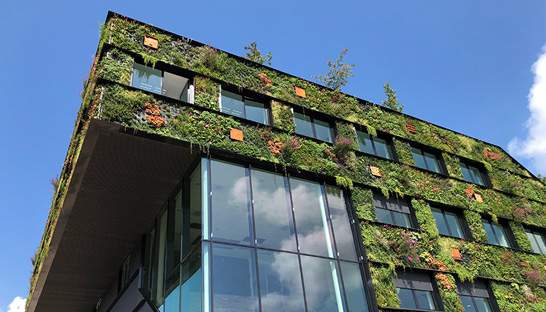
Biophilic office design takes this a step further by actively integrating nature into the interior. Studies show that natural elements such as plants, green walls, water features, and natural materials can reduce stress levels, increase creativity, and improve overall workplace satisfaction. For Amsterdam offices in densely built urban environments, this design approach can soften the contrast between the busy outside world and calm interior spaces.

ESG Pressure and Value Development

ESG criteria are playing an increasingly important role in the valuation and financing of offices in Amsterdam. Institutional investors, pension funds, and banks are demanding greater transparency regarding energy performance, CO₂ emissions, health, and building inclusivity. The focus is shifting from simple label improvements toward a broader approach encompassing health, well-being, circular materials, and social safety.

Certification systems such as BREEAM, WELL, and Fitwel provide frameworks for measuring and comparing these performances. For investors and users, this means that investments in customized work environments not only benefit employees and productivity but also contribute to higher property values, better marketability, and improved access to financing.

Analyses show that sustainable and wellness-oriented offices retain their value better and experience lower vacancy rates than comparable non-sustainable buildings. At the same time, experts warn about the risk of the so-called brown discount: buildings that are not adapted in time may rapidly decline in value and face higher financing costs.

Strategic Considerations for the Future

The transition from open-plan offices to customized work environments requires careful consideration. In every scenario, both tangible and intangible costs and benefits must be taken into account. European market data shows that rental prices for high-quality offices in cities such as Amsterdam continue to rise, suggesting that well-designed, high-quality offices maintain their competitive position.

The complexity of today’s office market requires decisions to be based not solely on intuition or historical patterns. Occupancy analyses, mobility data, HR indicators, and ESG scores must be considered together to create robust strategies. Working with scenarios enables organizations to better anticipate uncertainty.

For tenants, users, and investors in Amsterdam, the choice is no longer limited to open-plan offices or not, but instead revolves around thoughtful and participatory approaches in which workplace strategy, real estate, HR, and technology are considered as one integrated whole. The Amsterdam office market demands solutions that respond to local dynamics, international developments, and the growing need for healthy, flexible, and inspiring workplaces.

The transformation from open-plan offices to customized work environments is not an endpoint, but a continuous process of adaptation and improvement. Organizations that successfully navigate this transition invest not only in buildings and technology, but above all in the well-being and productivity of their most valuable asset: their people. In a city like Amsterdam, where talent is scarce and competition is intense, a thoughtful workplace strategy can make the difference between leading the market and falling behind in the battle for top talent and strong performance.


ESG certification is driving up office rents in Amsterdam

The Amsterdam office market is undergoing a fundamental shift in which ESG certification is no longer an extra feature, but a direct determinant of rental prices and market positioning. Offices with a BREEAM or LEED certification in Amsterdam achieve rental premiums of up to 6.1 percent higher than comparable non-certified properties. This development forces both tenants and investors to make strategic decisions, with sustainability, affordability and future-proofing taking center stage.

From optional to indispensable: ESG as a pricing factor

ESG certification has rapidly evolved into a direct pricing factor within the Amsterdam office market. Whereas sustainability was previously mainly a matter of reputation, it now directly translates into higher rental prices. Dutch BREEAM-certified offices achieve on average approximately 12 percent higher rents, with each additional percentage point in the BREEAM score generating around €1.69 extra rent per square meter per year.

These rental premiums do not arise in a vacuum. European regulations such as the Corporate Sustainability Reporting Directive (CSRD), along with national requirements such as the mandatory energy label C for office buildings, force major occupiers and investors to strongly consider the sustainability quality of their real estate in decision-making processes. Since January 2023, office buildings in the Netherlands must have at least energy label C in order to be legally used as offices.

The market is already anticipating stricter regulations moving toward energy label A by 2030. This creates a clear divide between scarce, highly certified A-grade buildings with higher rents but lower operational costs, and outdated buildings struggling with declining value and weakening negotiating positions.

Affordability: more than just base rent

For tenants, this development means affordability is no longer determined solely by base rent. Total occupancy costs also include service charges, energy costs and the extent to which a building helps organizations meet internal sustainability goals and external reporting obligations. An office with energy label A costs approximately €25 per square meter annually in energy expenses, while a label G office can exceed €80 per square meter.

For a standard office space, the difference between an energy-efficient label A office and an outdated label G building can amount to approximately €15,000 per year. These operational savings partly compensate for the higher rental prices of certified properties. In addition, sustainable offices help organizations comply with CSRD reporting obligations, which are being introduced in phases starting from 2024.

The choice for an ESG-certified office therefore becomes a broad strategic consideration in which real estate, finance and sustainability departments within organizations must closely collaborate. Companies with strong sustainability performance often benefit from more favorable financing conditions, where interest rates are linked to measurable sustainability improvements.

Stricter financing requirements are changing the playing field

Banks and investors play a major role in this market shift. Since January 2025, European financial institutions have been required to provide insight into the sustainability of their investments. As a result, every financing application now requires detailed sustainability information. Real estate investors seeking to finance or refinance office properties in Amsterdam must demonstrate that their buildings meet certain energy labels and sustainability criteria.

Organizations with strong sustainability performance can expect broader financing opportunities and more favorable conditions. The interest rate advantage can amount to approximately half a percentage point, which can result in substantial savings over the duration of multimillion-euro real estate financing. Offices with poor energy labels face value declines of 10 to 25 percent, not only because of higher operational costs but also due to increasing legal and market risks.

This dynamic increases concerns regarding so-called “stranded assets”: real estate properties that are no longer economically or legally viable because they fail to comply with new sustainability standards. For owners of weaker office properties in Amsterdam, this means choosing between major sustainability investments, selling at a lower price or transforming the property into another function.

Scarcity strengthens negotiating positions

The Amsterdam office market demonstrates how ESG certification, location quality and market scarcity come together in pricing structures. Rental prices in prime locations are around €590 per square meter annually, while secondary locations average approximately €217 per square meter. Around 90 percent of leased office space in Amsterdam falls within the highest segment, dominated by modern, energy-efficient and often certified buildings.

This concentration of demand within the sustainable premium segment creates scarcity. The Dutch real estate association NVM specifically signals a shortage of smaller, sustainable and high-quality office units in easily accessible locations. This limits organizational choice and weakens tenants’ negotiating positions toward property owners. In a tight market, owners of high-quality certified offices can pass a large part of the premium on to tenants.

For tenants aiming to achieve their sustainability ambitions, a phased strategy is becoming increasingly important. By defining requirements early regarding energy labels, certifications and clauses within lease agreements, organizations can create more clarity in the negotiation process. Agreements regarding improvements, measurable goals and evaluation moments are essential to prevent companies from becoming locked into office spaces that no longer align with stricter future standards.

Transformation as a strategic alternative

For buildings where sustainability upgrades are not financially viable, transformation into residential properties or alternative functions is becoming a realistic option. Amsterdam’s new office strategy focuses on reuse and flexibility, assessing per district what is necessary and achievable. With approximately 1.7 million square meters of office space in the development pipeline, the focus is shifting from quantity toward quality.

From a sustainability perspective, transformation offers several advantages. Reusing existing buildings limits the environmental impact of demolition and new construction. Former office buildings can be equipped with modern, energy-efficient systems during transformation, resulting in significantly improved sustainability profiles after redevelopment.

Fiscal incentives such as the Environmental Investment Allowance (MIA) and the Arbitrary Depreciation of Environmental Investments scheme (Vamil) can provide additional stimulation for both sustainability improvements and transformation projects. Through the MIA scheme, entrepreneurs can deduct up to 45 percent of investments in environmentally friendly business assets from their taxable profit.

The new reality of the Amsterdam office market

ESG certification has definitively penetrated the core of the Amsterdam office market. It now determines not only rental prices, but also financing opportunities, market positioning and the future outlook of office buildings. For tenants, this means rethinking real estate strategies, where total occupancy costs, reporting obligations and workplace experience must be evaluated together.

Owners and investors face the choice of investing in sustainability improvements or accepting value decline, potentially followed by transformation. The divide within the market is expected to increase further, with high-quality certified buildings benefiting from scarcity and strong demand, while outdated buildings become increasingly difficult to lease.

For all market participants, sustainability is no longer a secondary issue but a core component of every real estate transaction. Sustainable lease agreements, clear clauses and transparent data sharing are becoming increasingly common. In this context, strong real estate advisory services are essential for making informed decisions regarding location, sustainability, affordability and long-term future-proofing. The Amsterdam office market increasingly demands parties that understand this complexity and translate it into clear choices for both tenants and landlords.

Office design as a competitive advantage

The labor market is undergoing significant change. Where employers once had the luxury of choosing from an abundance of talent, they now struggle to attract and retain the right people. One group, however, remains underutilized: neurodivergent talent. Employees with ADHD, autism, dyslexia, or other neurological differences make up 15 to 20 percent of the population, yet their participation in the workforce remains significantly lower. The solution lies not only in improved HR processes, but also in the physical work environment.

Office Design as a Strategic Choice

For many organizations, office design is primarily a matter of aesthetics and efficiency. However, when it comes to attracting and retaining neurodivergent talent, the work environment plays a crucial role. While traditional open-plan offices may be inspiring for some, they often present daily challenges for neurodivergent employees. Sensory overload caused by background noise, artificial lighting, and constant movement can lead to exhaustion, reduced productivity, and eventually burnout or absenteeism.

This is not about luxury or indulgence. For neurodivergent employees, adjustments such as sound insulation, flexible workspaces, and quiet rooms are practical necessities. Just as an ergonomic chair prevents back pain, a thoughtfully designed office helps prevent mental overload and burnout. Employers in the Netherlands who recognize this position themselves as attractive employers for a significant portion of the workforce.

The Diversity of Neurodiversity

A common mistake is thinking in stereotypes. There is no single blueprint for an “autism-friendly office” or an “ADHD-proof workspace.” Neurodivergent individuals form a diverse group with varying needs. Someone with ADHD may benefit from a dynamic environment with room for movement, while someone on the autism spectrum may require predictability and calm.

The key lies in flexibility and choice. Successful office designs offer:

  • Different zones for focused work, collaboration, and relaxation
  • Adjustable lighting per workspace or zone
  • Acoustic solutions such as quiet rooms and sound-absorbing materials
  • Clear wayfinding and predictable layouts
  • Flexible workstations, with fixed desks for those who prefer routine

Location as an Overlooked Factor

When it comes to inclusive workplace design, employers often focus only on the interior. However, the office location is just as important. Neurodivergent employees may have specific preferences or limitations when it comes to commuting. A busy transport hub can be overwhelming for some, while others depend on strong public transport connections.

DRS Makelaars evaluates not only accessibility but also environmental factors such as noise levels, crowd density, and movement patterns around potential locations. An office above a busy restaurant or next to a construction site may seem attractive on paper in terms of price and space, but in practice it can be unsuitable for a diverse team. This location analysis, combined with flexible office design, determines the true usability and comfort for all employees.

The Business Case for Inclusive Design

Skeptics often view inclusive design as an added cost. However, the data tells a different story. Inclusive office design typically adds 5 to 12 percent to the interior budget, but this investment is often recovered within 18 to 36 months. This is due to lower absenteeism, reduced turnover costs, and increased productivity. Offices with strong acoustic solutions and flexible layouts experience 25 to 35 percent less unplanned absence.

Moreover, the benefits extend beyond neurodivergent employees. Good acoustics, natural light, and flexible workspaces improve the well-being and productivity of the entire team. Parents who need temporary quiet, employees doing focused work, or colleagues recovering from burnout all benefit from an environment that supports different working styles.

From Theory to Practice

Creating an inclusive office requires a structured approach. Successful projects begin with a thorough analysis of HR needs. What percentage of neurodivergent talent does the organization want to attract? Which roles are suitable? And most importantly, what sensory profiles exist within the current and future workforce?

In selecting office space, DRS Makelaars plays a key role. We assess not only square footage and rent, but also suitability for inclusive working. Is there room for different zones? Does the landlord allow modifications? How flexible is the lease if changes are needed later?

“Inclusive office design is not a final destination, but an ongoing process. The first months after moving in are crucial for gathering feedback and making targeted adjustments.”

Contractual Flexibility

An often overlooked aspect is the contractual flexibility for modifications. Standard lease agreements frequently limit the ability to make interior changes. DRS Makelaars negotiates specific clauses that allow for improvements without additional costs or penalties. This proactive approach prevents good intentions from being blocked by legal constraints.

Pitfalls and Realism

Enthusiasm for inclusive office design should not lead to unrealistic expectations. A “neurodivergent-friendly” label without a clear HR strategy can backfire. Office design alone does not solve the complex challenges of neurodiversity in the workplace. It requires a cohesive approach where workspace, culture, leadership, and working practices align.

There is also the risk of generalization. What works for one neurodivergent employee may hinder another. Continuous dialogue, feedback, and a willingness to adapt remain essential. The office must adapt to the team’s needs, not the other way around.

The Future of Work in Amsterdam and the Randstad

The Dutch office market is evolving alongside international trends toward human-centered design. In Amsterdam and the Randstad in particular, there is a clear shift from pure efficiency to workplaces that combine well-being and performance. Inclusion is increasingly becoming a requirement for suppliers, driven by both social responsibility and business considerations.

For growing organizations and multinationals looking to establish themselves in this region, inclusive office design offers a competitive advantage. It demonstrates social awareness and attracts talent that might otherwise be overlooked. In a tight labor market, this can make the difference between growth and stagnation.
DRS Makelaars understands this shift. With nearly 40 years of experience in the Amsterdam and regional real estate market, we know not only the buildings, but also the opportunities behind them. We help organizations find office space that meets their current needs and allows room for an inclusive workplace in the future. Because ultimately, real estate is not about buildings, but about the people who work in them.

Energy Transition in Amsterdam’s Office Market

De Nederlandse kantorenmarkt staat voor een ingrijpende verandering. Nieuwe energieregels dwingen eigenaren en gebruikers van commercieel vastgoed tot fundamentele keuzes. Voor bedrijven die kantoorruimte zoeken of bezitten in Amsterdam en de Randstad wordt de energieprestatie een bepalende factor voor waarde, verhuurbaarheid en bedrijfsvoering.

CSRD maakt energieprestatie onderdeel van de bedrijfsvoering

Sinds januari 2024 moeten grote ondernemingen met meer dan 250 werknemers of een omzet boven 50 miljoen euro hun CO2-uitstoot rapporteren volgens de Corporate Sustainability Reporting Directive, CSRD. Dit geldt ook voor de emissies van gehuurde kantoorruimte. Wat voorheen vooral een kostenpost was, is nu een onderdeel van wet- en regelgeving en heeft invloed op de bedrijfsreputatie.

Voor multinationals en groeiende organisaties betekent dit dat de energieprestatie van hun kantoor direct invloed heeft op hun duurzaamheidsrapportage. Een slecht presterend kantoor wordt daarmee een bedrijfsrisico. In 2026 breidt deze verplichting zich uit naar ongeveer 50.000 Nederlandse bedrijven, waardoor de vraag naar energiezuinige kantoren sterk toeneemt.

Financiering en waardering onder druk

Banken en institutionele beleggers, zoals pensioenfondsen, koppelen de beschikbaarheid van krediet steeds vaker aan EPC-scores. Kantoren met een D- of E-label krijgen te maken met hogere rentetarieven of komen niet meer in aanmerking voor financiering. Onderzoek toont aan dat kantoren met slechte energieprestaties 10 tot 25 procent aan waarde verliezen en gemiddeld 6 tot 12 weken langer leegstaan.

Voor vastgoedeigenaren in Amsterdam en omgeving wordt dit een kritieke factor. Ongeveer 40 procent van het Nederlandse kantoorbestand heeft momenteel een EPC-label D of lager. Deze panden, vooral gebouwd tussen 1980 en 2000, vragen om forse investeringen om aan toekomstige eisen te voldoen.

EPBD-herziening dwingt tot actie

De herziene Energy Performance of Buildings Directive, EPBD, verplicht Nederland om tussen 2027 en 2030 kantoren naar de nZEB-standaard, nearly zero-energy buildings, te brengen. Dit betekent minimaal een EPC-label C voor alle kantoorgebouwen. De Nederlandse uitwerking wordt verwacht in de periode 2026 tot 2027, waardoor de tijd voor aanpassingen beperkt is.

De kosten voor het verbeteren van een kantoor van label D naar C liggen tussen 400 en 900 euro per vierkante meter, afhankelijk van het bouwjaar en de aanwezige installaties. Voor eigenaren van grote kantoorpanden gaat het om investeringen van miljoenen euro’s, die zorgvuldig gepland moeten worden.

CO2-prestatieladder als marktstandaard

Hoewel vrijwillig, ontwikkelt de CO2-prestatieladder zich tot een feitelijke standaard in de Amsterdamse kantorenmarkt. Steeds meer huurders, vooral in de financiële sector, bij techbedrijven en multinationals, selecteren kantoren op basis van deze certificering. Eigenaren met gecertificeerde panden zien lagere leegstandsrisico’s en kunnen 5 tot 12 procent hogere huren vragen.

Voor commerciële vastgoedspecialisten is het essentieel om deze ontwikkeling goed te begrijpen. Het verschil tussen een goed en een slecht presterend kantoor wordt steeds groter, met directe gevolgen voor investeringsrendement en marktpositie.

Strategische keuzes voor eigenaren en gebruikers

Vastgoedeigenaren staan voor een duidelijke keuze: investeren in renovatie of slecht presterende panden verkopen. De timing is daarbij cruciaal. Pensioen- en verzekeringsmaatschappijen hebben aangekondigd dat zij 20 tot 30 procent van hun kantoorfinancieringen beëindigen als niet aan de ESG-eisen wordt voldaan. Herfinanciering in de periode 2025 tot 2026 wordt daarom kritisch voor eigenaren met leningen uit 2020.

Voor huurders ontstaan nieuwe onderhandelingsmogelijkheden. Bij panden die renovatie nodig hebben, kunnen zij huurreductie bedingen of afspraken maken over de verdeling van kosten. Tegelijkertijd moeten zij bij de keuze voor nieuwe kantoorruimte rekening houden met hun eigen CSRD-verplichtingen.

Regionale verschillen en marktfragmentatie

Amsterdam loopt voorop in de energietransitie, met 48 procent van het kantoorbestand binnen de ESG-beleggingsnorm. In de bredere Randstad ligt dit percentage op 52 procent. Deze regionale verschillen zorgen voor marktfragmentatie: goede kantoren in Amsterdam worden relatief duurder, terwijl minder duurzame panden buiten de Randstad mogelijk in een lagere prijscategorie terechtkomen.

Voor investeerders en beleggers biedt dit zowel risico’s als kansen. Wie tijdig inspeelt op de energietransitie kan waardeverlies beperken en zelfs extra waarde creëren. Kantoren die met ESG-financiering worden gefinancierd leveren weliswaar 2 tot 4 procent minder direct rendement op, maar de lagere risico’s en minder leegstand compenseren dit op de lange termijn.

Praktische stappen voor vastgoedstrategie

Voor zowel eigenaren als gebruikers van commercieel vastgoed is een gestructureerde aanpak noodzakelijk:

  • Inventarisatie van de huidige situatie: Bepaal de exacte EPC-status en de CSRD-rapportageverplichtingen.
  • Scenarioanalyse: Vergelijk de kosten en baten van renovatie met herlocatie of verkoop.
  • Markttiming: Anticipeer op strengere regelgeving en veranderende financieringsvoorwaarden.
  • Certificering: Overweeg de CO2-prestatieladder, BREEAM of andere certificeringen om de marktpositie te versterken.
  • Contractuele afspraken: Leg vast wie verantwoordelijk is voor toekomstige investeringen in verduurzaming.

De rol van strategisch vastgoedadvies

In deze complexe markt wordt onafhankelijk advies steeds waardevoller. Met bijna 40 jaar ervaring in de Amsterdamse kantorenmarkt zien wij bij DRS Makelaars hoe energieprestatie de nieuwe scheidslijn vormt tussen succesvolle en problematische vastgoedinvesteringen. Onze kennis van de lokale marktdynamiek, gecombineerd met toegang tot kansen buiten de reguliere markt via ons internationale netwerk, stelt ons in staat om cliënten gericht door deze overgang te begeleiden.

Voor organisaties die zoeken naar toekomstbestendige huisvesting is het analyseren van energieprestatie in combinatie met locatie, bereikbaarheid en marktpositie essentieel. Wij ondersteunen bij het maken van deze strategische keuzes, van de eerste marktanalyse tot en met de definitieve contractonderhandelingen.

De energietransitie in commercieel vastgoed is geen toekomstscenario, maar een ontwikkeling die nu al speelt. Eigenaren en gebruikers die tijdig en doordacht handelen, versterken hun positie in een markt waarin duurzaamheid bepalend is voor waarde en continuïteit. De komende jaren maken het verschil tussen vastgoed dat zijn waarde behoudt en vastgoed dat achterblijft. Tijdig anticiperen en professioneel advies inzetten vergroot het verschil tussen risico en rendement.