 020 640 52 52
 020 640 52 52


 Offer
Offer
 Advice on renting


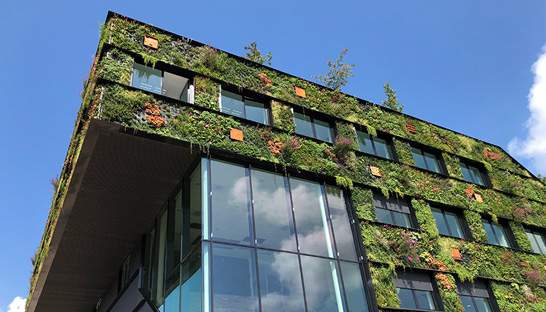
For years, open-plan offices dominated as the standard solution for efficient space utilization. Today, however, a new reality is emerging in which customization, well-being, and productivity take center stage. This shift is not a temporary trend, but a structural transformation driven by scientific insights, changing work patterns, and an increasing focus on sustainability and health.
The Open-Plan Office Has Reached Its Limits
Since the 1990s, the open-plan office has become the dominant office concept in Amsterdam. Open layouts made it possible to create many workstations on a single floor, aligning with management ideas about transparency and short communication lines. A significant part of Amsterdam’s office real estate was developed during this period according to this open-office philosophy.
Research now shows that the assumed productivity gains of open offices do not apply to all types of work. Studies indicate that approximately 69% of employees in open offices experience noise disturbances as a barrier to productivity. On average, it takes more than twenty minutes to fully regain concentration after an interruption. These findings align with cognitive psychology research on multitasking, which shows that frequent interruptions lead to mistakes, fatigue, and lower task performance.
The COVID-19 pandemic acted as a catalyst for reconsideration. During lockdowns, many knowledge workers discovered that working from home often provided greater autonomy and concentration. Employees who became accustomed to quiet home working environments frequently experience returning to busy open offices as a step backward. This has increased the demand for offices that better accommodate different work styles and tasks.
The Amsterdam Market in Motion
The Amsterdam office market presents a nuanced picture. As of January 1, 2024, average office vacancy in the Amsterdam Metropolitan Area was approximately 12.4%, while vacancy within the municipality of Amsterdam stood around 7.8% according to CBRE’s definition. Using a broader definition, vacancy in Amsterdam rose to approximately 9.3% in 2024, placing the capital above the national average.
This rising vacancy is not evenly distributed across the city. The most desirable, accessible, and sustainable office buildings with modern facilities still maintain relatively low vacancy rates and stable or even rising rental prices. Outdated, single-purpose, or poorly accessible office spaces, on the other hand, are increasingly struggling to attract tenants.
For Amsterdam, this means that office value is no longer determined primarily by location and square meters alone, but increasingly by the quality and flexibility of the work environment. Buildings that can adapt well to flexible working, hybrid usage, ESG requirements, and wellness programs are considered future-proof.
Scientific Evidence for Better Workplaces
An influential report by the World Green Building Council convincingly demonstrates that office design has substantial effects on employee health, well-being, and productivity. The report identifies air quality, thermal comfort, daylight and lighting, acoustics, views of greenery, ergonomics, and floor plan layout as crucial factors.
The mechanisms behind these effects are both physiological and psychological. Poor air quality and high CO₂ concentrations can lead to headaches, drowsiness, and reduced cognitive performance. Insufficient or incorrect lighting disrupts the sleep-wake cycle and indirectly contributes to fatigue and concentration problems. Noise disturbances and lack of privacy in open offices increase stress levels and encourage avoidance behavior.
Dutch examples show that targeted improvements in lighting, acoustics, furniture, and layout lead to more comfort, higher satisfaction, fewer complaints, and often measurable productivity gains. However, a beautifully designed office that is not supported by clear agreements regarding hybrid work, focus time, and availability does not fully realize its potential.
From Open-Plan Offices to Activity Based Working
Activity based working is a design approach in which workspaces and rooms are linked primarily to activities rather than individuals. Employees choose the environment best suited to each task: a quiet room for concentrated writing, a project room for intensive collaboration, or an informal lounge for creative sessions.
A hybrid office in 2025 is characterized as an environment explicitly designed for a mix of physical and online presence. Instead of full occupancy on all working days, organizations operate with varying numbers of employees present. This requires relatively fewer traditional desks and more small meeting rooms, focus spaces, phone booths, and social zones.
For Amsterdam offices, the urban context plays an important role. The combination of high-quality public transport connections, strong cycling infrastructure, and urban amenities makes it possible to position the office as part of daily city life. At the same time, hybrid work means occupancy rates are structurally lower, making it financially and ecologically inefficient to invest exclusively in traditional workplace configurations.
Design Principles for Focus and Well-Being
One of the most important design principles in the transition toward customized work environments is the deliberate creation of focus zones and quiet workspaces. These zones are intended for tasks requiring deep concentration and are characterized by minimal distraction, strong acoustics, and visual calmness.
The concept of quiet zones is increasingly viewed as an essential component of office design. These zones range from fully enclosed focus rooms for one or two people to semi-private acoustic areas with partial walls. In addition, behavioral agreements and technological tools are implemented, such as do-not-disturb signals and software supporting focus time.
Biophilic office design takes this a step further by actively integrating nature into the interior. Studies show that natural elements such as plants, green walls, water features, and natural materials can reduce stress levels, increase creativity, and improve overall workplace satisfaction. For Amsterdam offices in densely built urban environments, this design approach can soften the contrast between the busy outside world and calm interior spaces.
ESG Pressure and Value Development
ESG criteria are playing an increasingly important role in the valuation and financing of offices in Amsterdam. Institutional investors, pension funds, and banks are demanding greater transparency regarding energy performance, CO₂ emissions, health, and building inclusivity. The focus is shifting from simple label improvements toward a broader approach encompassing health, well-being, circular materials, and social safety.
Certification systems such as BREEAM, WELL, and Fitwel provide frameworks for measuring and comparing these performances. For investors and users, this means that investments in customized work environments not only benefit employees and productivity but also contribute to higher property values, better marketability, and improved access to financing.
Analyses show that sustainable and wellness-oriented offices retain their value better and experience lower vacancy rates than comparable non-sustainable buildings. At the same time, experts warn about the risk of the so-called brown discount: buildings that are not adapted in time may rapidly decline in value and face higher financing costs.
Strategic Considerations for the Future
The transition from open-plan offices to customized work environments requires careful consideration. In every scenario, both tangible and intangible costs and benefits must be taken into account. European market data shows that rental prices for high-quality offices in cities such as Amsterdam continue to rise, suggesting that well-designed, high-quality offices maintain their competitive position.
The complexity of today’s office market requires decisions to be based not solely on intuition or historical patterns. Occupancy analyses, mobility data, HR indicators, and ESG scores must be considered together to create robust strategies. Working with scenarios enables organizations to better anticipate uncertainty.
For tenants, users, and investors in Amsterdam, the choice is no longer limited to open-plan offices or not, but instead revolves around thoughtful and participatory approaches in which workplace strategy, real estate, HR, and technology are considered as one integrated whole. The Amsterdam office market demands solutions that respond to local dynamics, international developments, and the growing need for healthy, flexible, and inspiring workplaces.
The transformation from open-plan offices to customized work environments is not an endpoint, but a continuous process of adaptation and improvement. Organizations that successfully navigate this transition invest not only in buildings and technology, but above all in the well-being and productivity of their most valuable asset: their people. In a city like Amsterdam, where talent is scarce and competition is intense, a thoughtful workplace strategy can make the difference between leading the market and falling behind in the battle for top talent and strong performance.